Zardozi Stitch
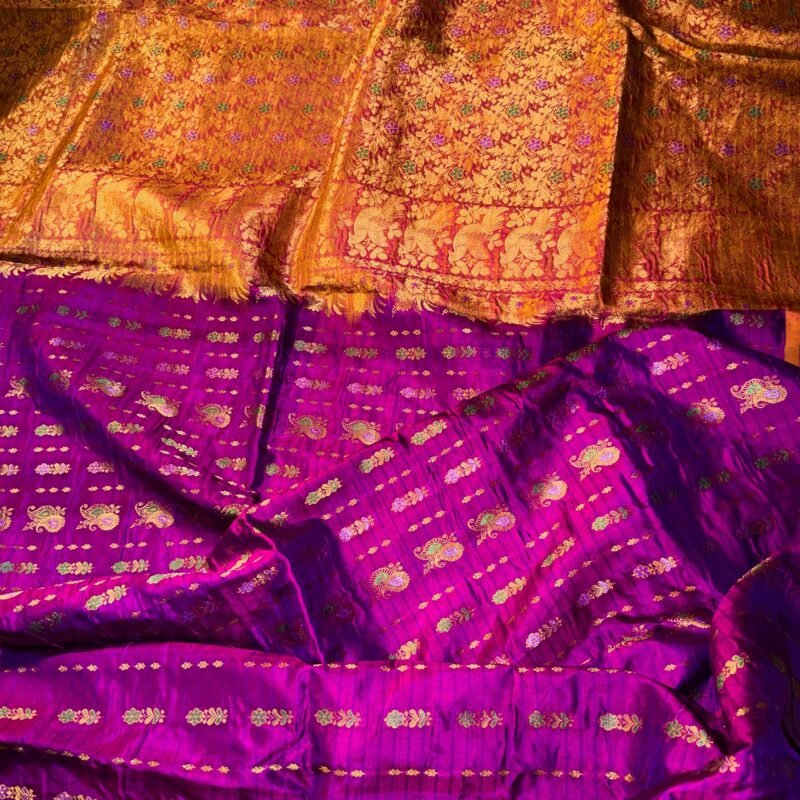
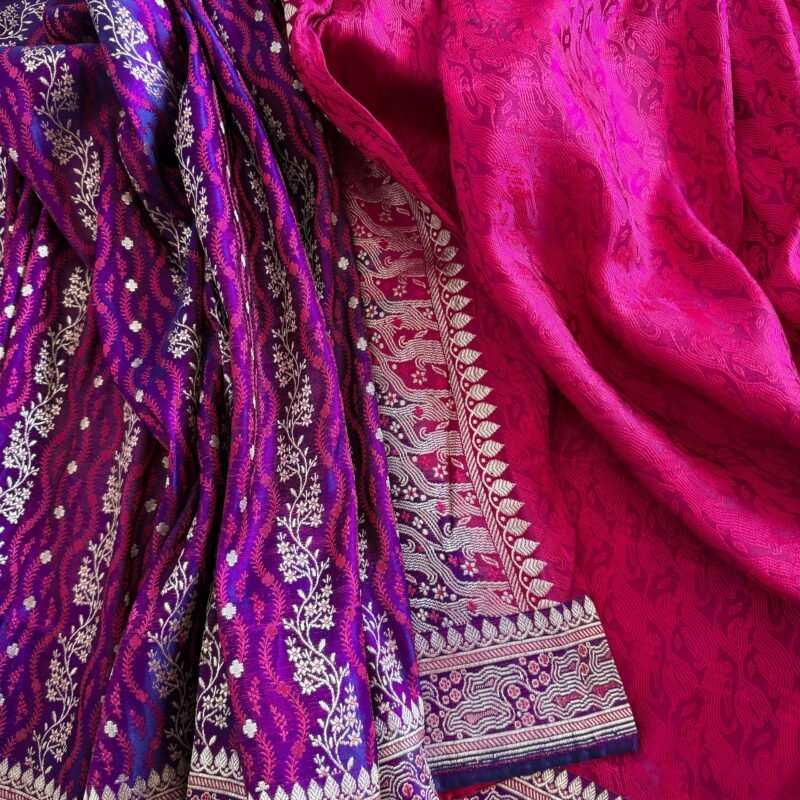
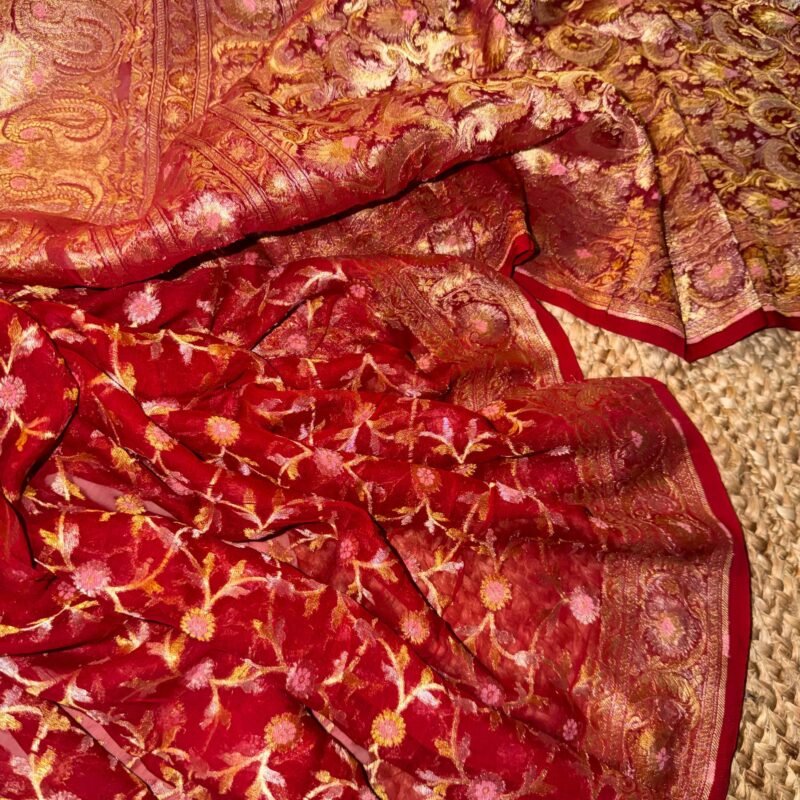
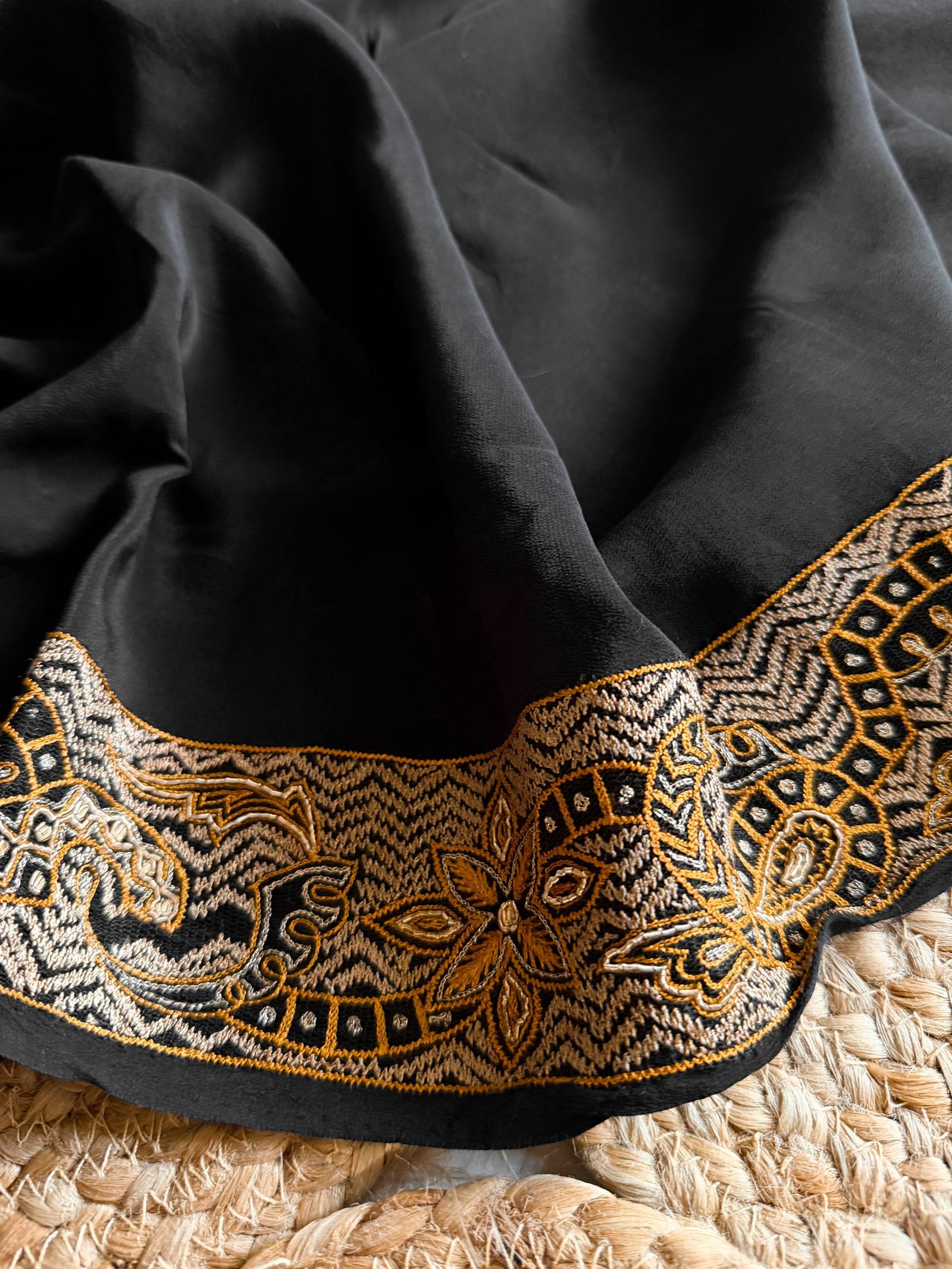
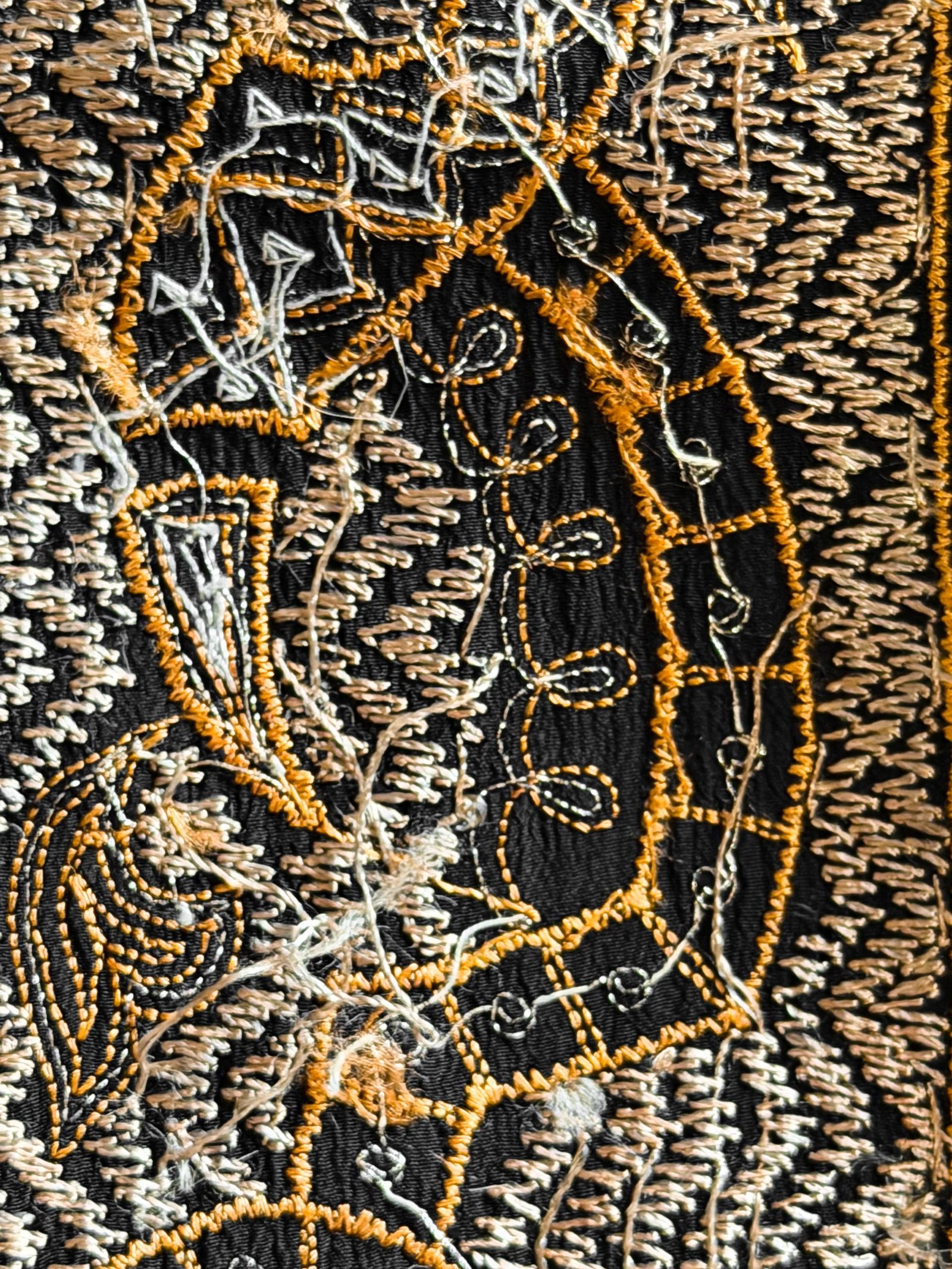
Zardozi is not just embroidery; it is a living remnant of royal India. Originating in Persia and reaching its zenith in the Mughal courts of India between the 16th and 19th centuries, Zardozi was once crafted using pure gold and silver threads drawn into fine wires, painstakingly laid and secured by hand onto silk, velvet or satin. Each motif- paisleys, florals, creepers and architectural geometries- was built layer by layer, often combining metal threads, silk and couching techniques to create a richly raised, almost sculptural surface. The process was slow, physically demanding and required years of apprenticeship, which is why Zardozi was reserved exclusively for royalty, ceremonial garments and sacred textiles. Today, authentic hand-done Zardozi is increasingly rare, as the skill has dwindled under the pressure of machine imitation and cost-cutting materials. Every genuine Zardozi piece carries within it centuries of craftsmanship, courtly patronage, and human labour- making it not merely decoration, but textile heritage worthy of preservation.
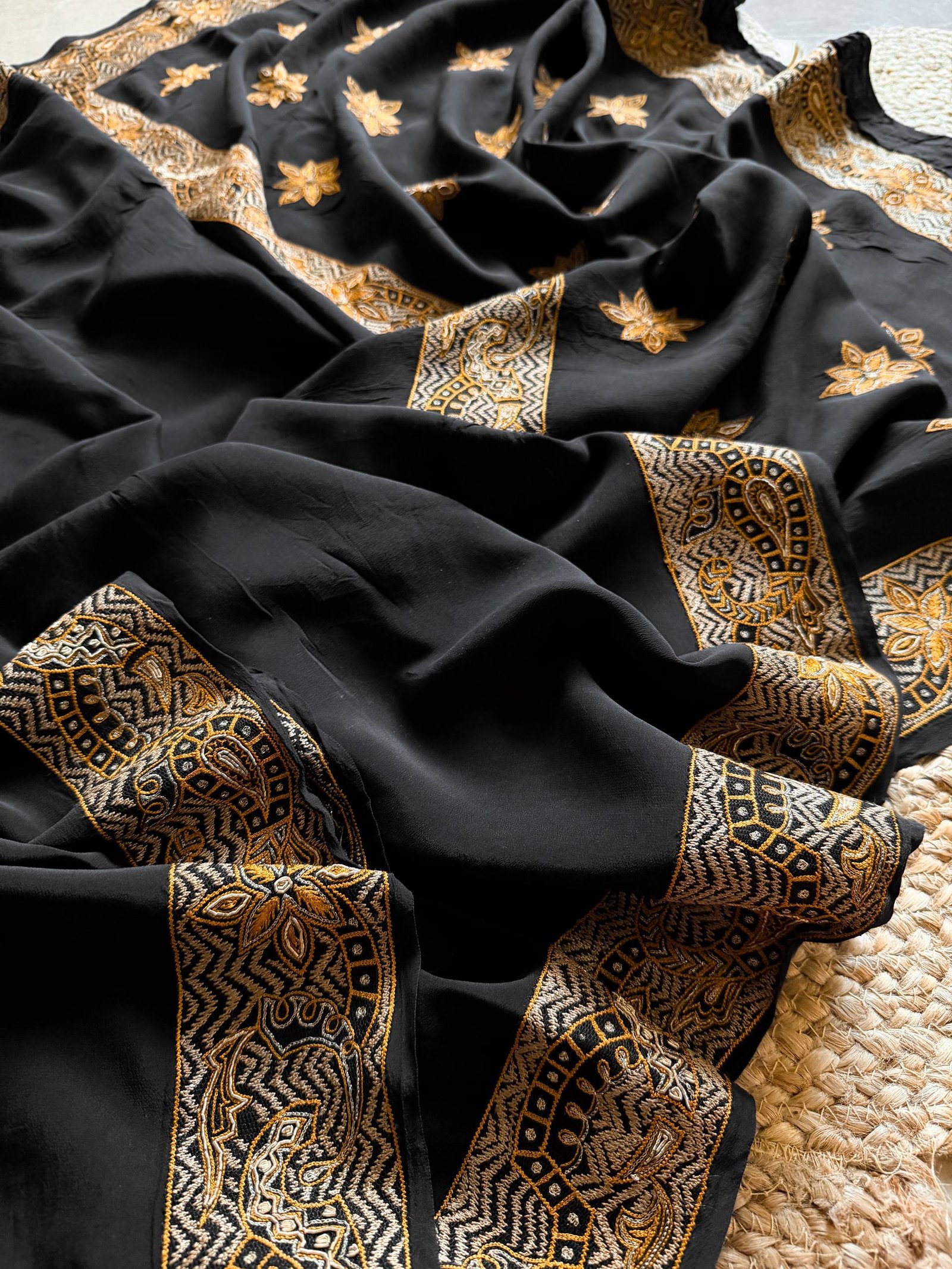
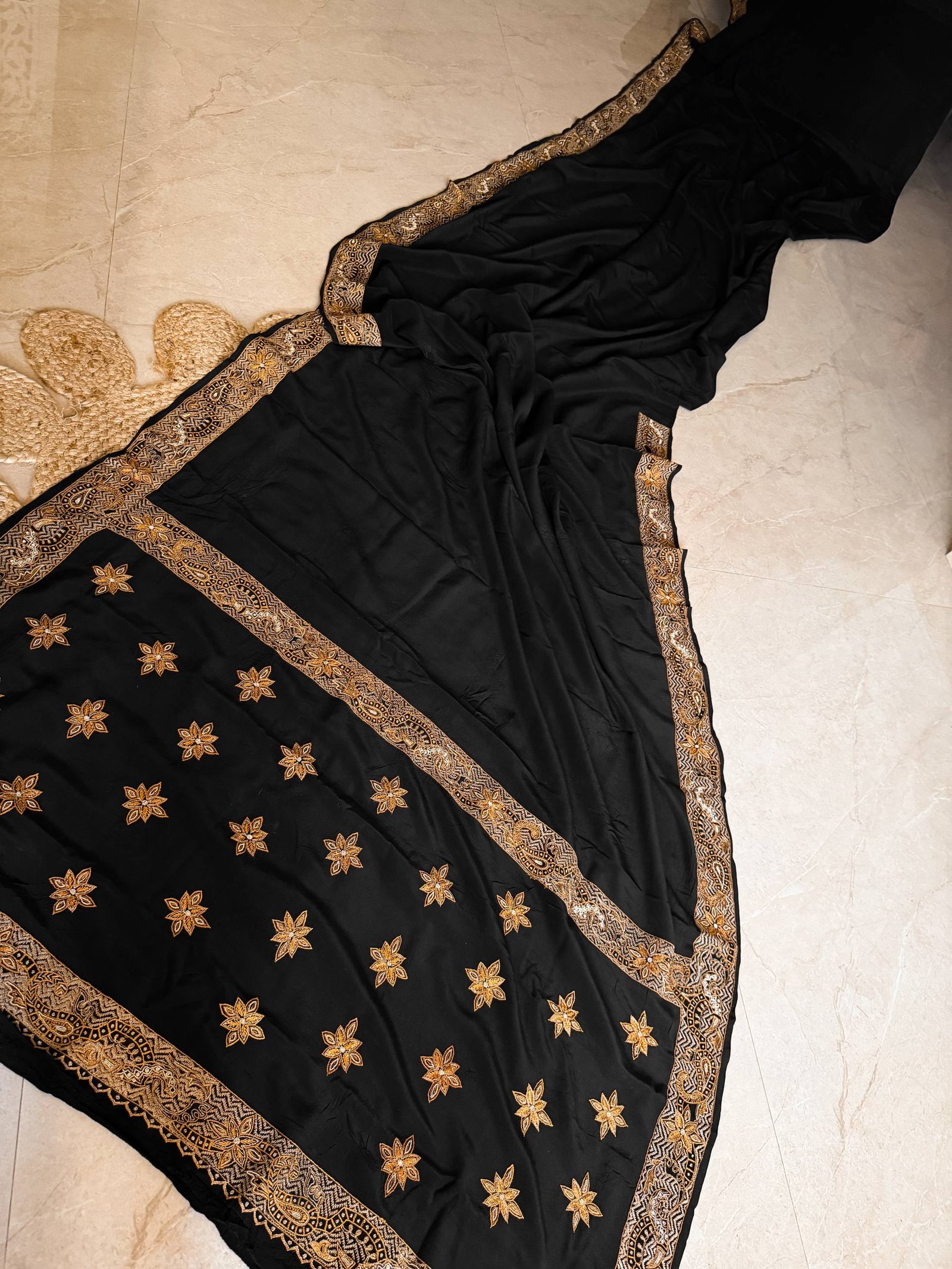
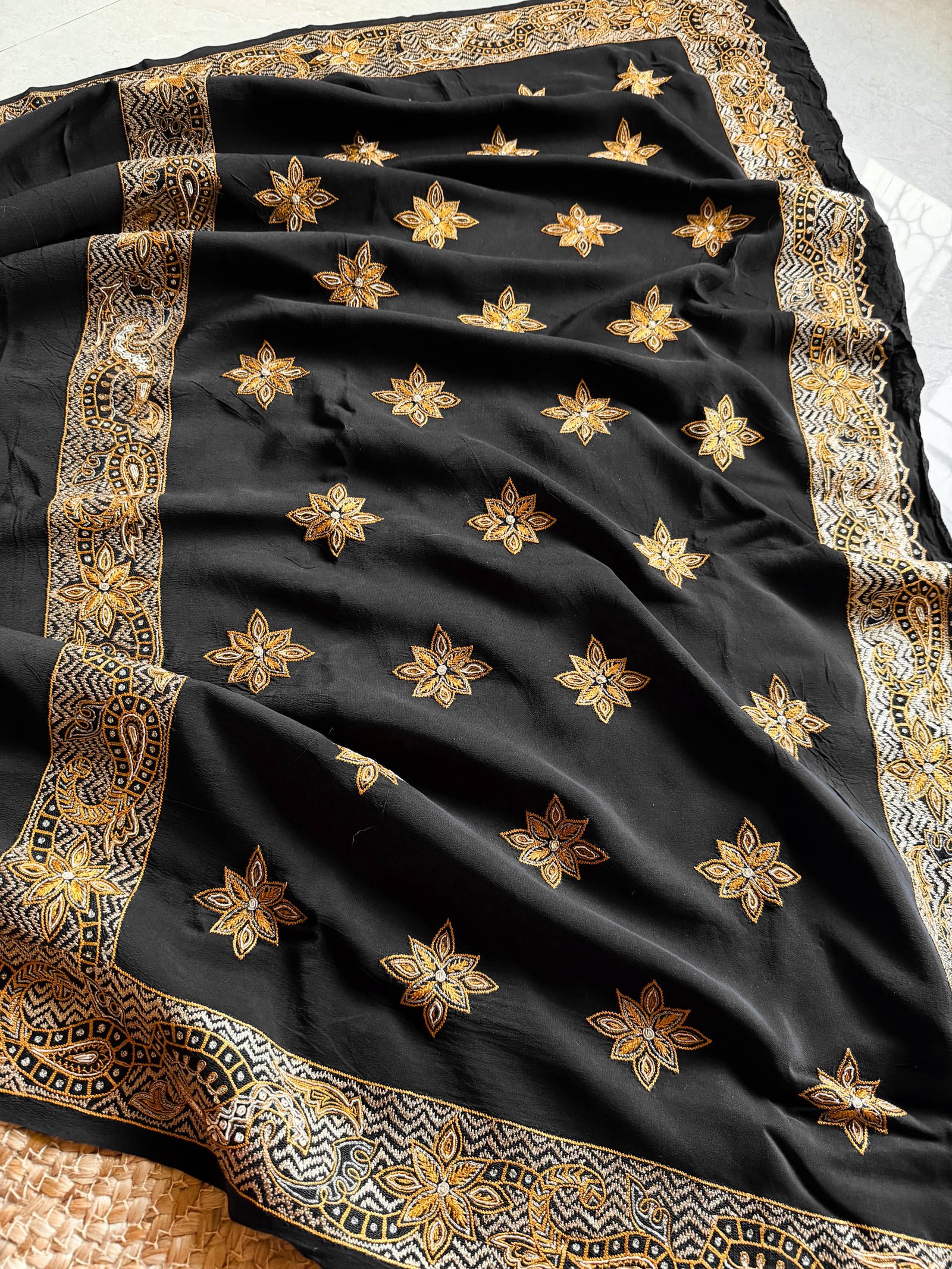
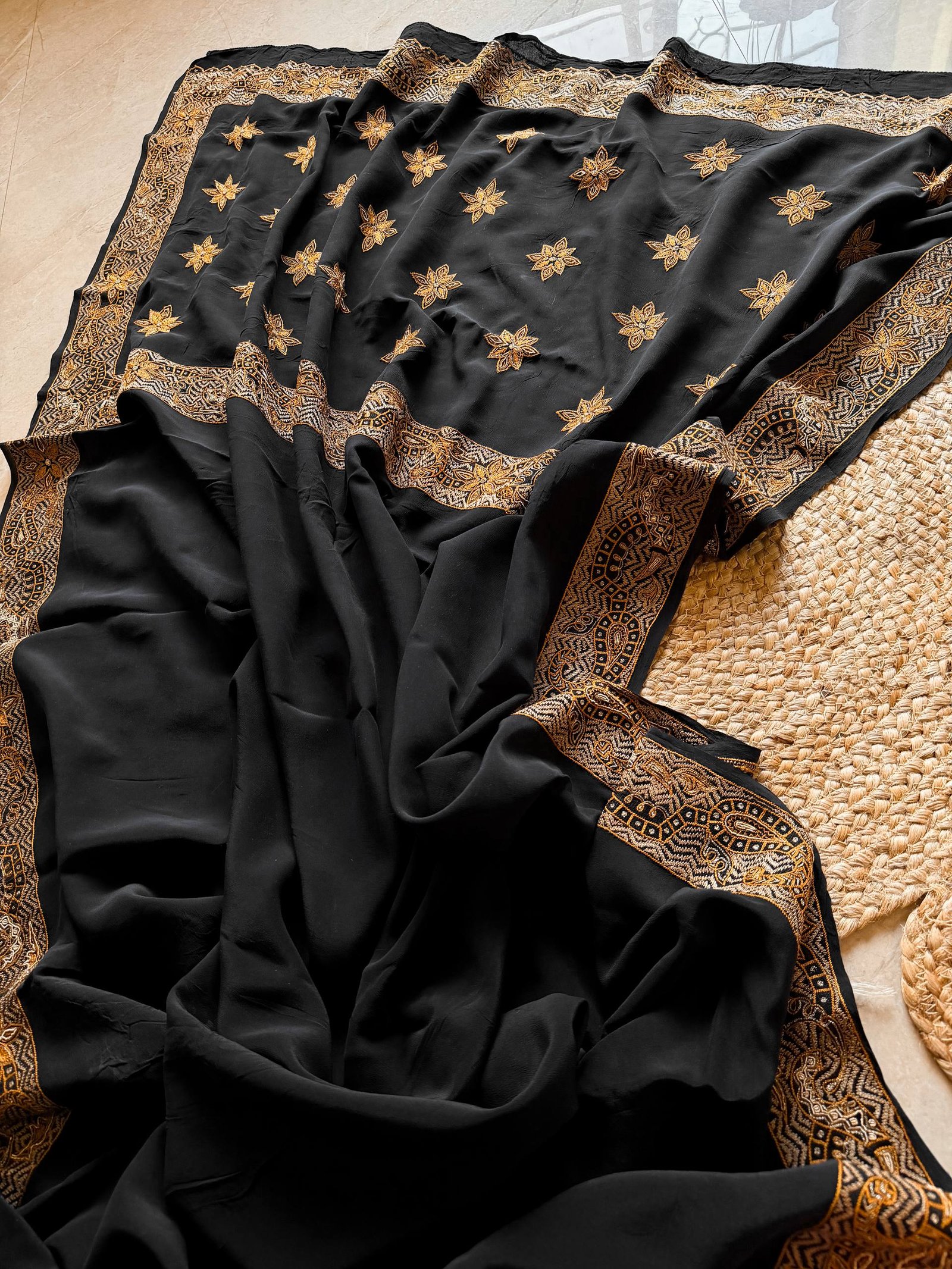
The saree here is carved with authentic hand-done Zardozi, adding life and light to a plain, extra sleek pure mulberry silk saree in deep black.